Every legendary timepiece has a story—a moment of inspiration, a problem to solve, or a vision to realize. These are the watches that changed horology forever and the fascinating histories behind them.
Some watches transcend their function as timekeeping instruments to become cultural icons. They've adorned the wrists of presidents and astronauts, survived the deepest oceans and highest peaks, and sparked design movements that continue to influence watchmaking decades later.
Understanding these histories enriches our appreciation of the timepieces we wear and helps explain why certain designs command such reverence—and such prices—in today's market.
The Watches That Changed Everything
The Oyster: Birth of the Waterproof Watch
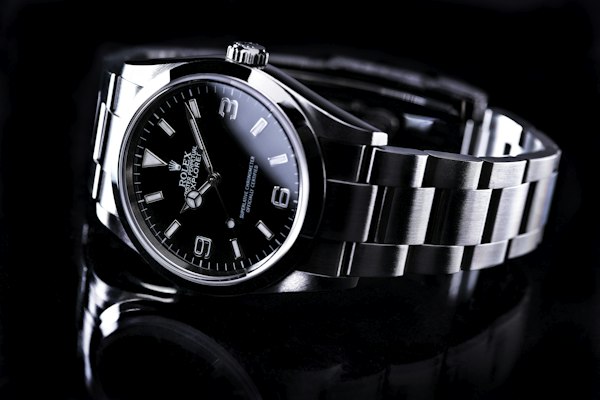
When Hans Wilsdorf introduced the Rolex Oyster, skeptics abounded. A waterproof watch? Impossible. To prove them wrong, Wilsdorf strapped an Oyster to English Channel swimmer Mercedes Gleitze. After over 10 hours in the frigid water, the watch emerged running perfectly.
The Oyster's hermetically sealed case—with its screw-down crown, bezel, and caseback—became the foundation for virtually every professional watch that followed. This wasn't just a product launch; it was the birth of the tool watch category.
Explore Rolex →The Submariner: Defining the Dive Watch
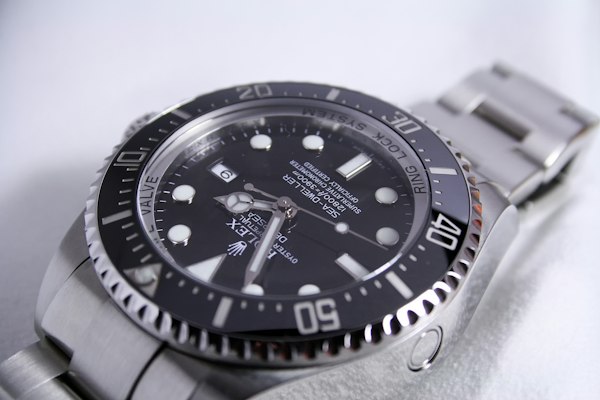
Though not the first dive watch, the Submariner defined what a dive watch should be. Its rotating bezel allowed divers to track elapsed time underwater, while 100 meters of water resistance (later increased to 300m) exceeded anything available at the time.
The design was so perfect that it has remained essentially unchanged for 70 years. Every modern dive watch—from every brand—owes something to the Submariner's template: unidirectional bezel, luminous markers, and a case designed to withstand the deep.
Explore Submariner →"The Submariner didn't just create a category—it created the archetype. To this day, designing a dive watch means deciding how much to borrow from Rolex's 1953 masterpiece."
The Speedmaster: Destined for the Moon
Designed as a racing chronograph for automotive enthusiasts, the Speedmaster's destiny lay far beyond any racetrack. When NASA began searching for a watch that could survive the rigors of space travel, they subjected candidates to brutal testing: extreme temperatures, humidity, shock, and vacuum.
Only the Speedmaster survived. On July 20, 1969, it became the first watch worn on the moon. But its finest hour came during Apollo 13, when astronauts used a Speedmaster to time a critical engine burn after onboard computers failed—helping bring the crew home safely.
Explore Speedmaster →The Royal Oak: Steel as Precious Metal
In 1972, the idea of a luxury sports watch in stainless steel seemed absurd. Steel was for tool watches; luxury meant gold. Then Audemars Piguet commissioned Gérald Genta to design something revolutionary.
Working through the night before Basel Fair, Genta sketched an octagonal bezel inspired by diving helmets, with exposed screws and an integrated bracelet. The Royal Oak shocked the industry—and customers paid gold prices for steel. It redefined luxury and spawned an entire category of "luxury sports watches" that dominates today's market.
Explore Royal Oak →The Nautilus: Genta's Second Masterpiece
Fresh from his Royal Oak triumph, Gérald Genta delivered another icon to Patek Philippe. The Nautilus, with its porthole-inspired case and horizontal embossed dial, brought sporting luxury to the most prestigious name in watchmaking.
Initially controversial among Patek purists who expected only dress watches, the Nautilus has become the brand's most coveted model. The blue-dial 5711—discontinued in 2021—now commands prices exceeding $100,000 on the secondary market.
Explore Nautilus →The Santos: The First Pilot's Watch
When Brazilian aviator Alberto Santos-Dumont complained to his friend Louis Cartier that checking a pocket watch while piloting was impossible, Cartier created a solution: a flat watch with a leather strap designed to be worn on the wrist.
The Santos wasn't just the first pilot's watch—it was among the first wristwatches designed specifically for men. Its square case and exposed screws broke from the round pocket watch tradition, establishing design codes that remain influential 120 years later.
Explore Santos →The Visionary: Gérald Genta
No discussion of iconic watch design is complete without acknowledging Gérald Genta, the most influential watch designer in history. Beyond the Royal Oak and Nautilus, Genta created the IWC Ingenieur, Bulgari Bulgari, and dozens of other influential designs.
His genius lay in challenging conventions. When everyone agreed that luxury meant gold and round cases, Genta made steel precious and shapes octagonal. When integrating bracelets was considered impossible, he made it elegant. His work proved that watch design could be art.
Design Elements That Endure
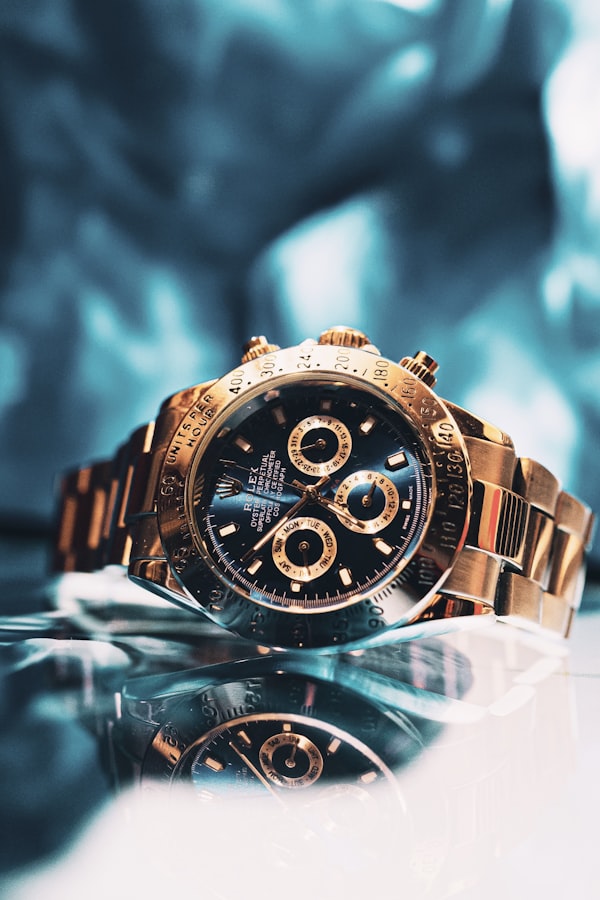
The Bezel: From the Submariner's rotating diver bezel to the Daytona's tachymeter, bezels evolved from functional tools to design signatures that define entire collections.
The Integrated Bracelet: Genta's Royal Oak proved that case and bracelet could be one continuous design. Today, integrated bracelets are hallmarks of luxury sports watches.
The Crown Guard: Panerai's crown-protecting device became so iconic that it defines the brand's aesthetic even when functionally unnecessary.
The Cyclops: Rolex's magnifying lens over the date has been both copied and criticized for decades, but it remains instantly recognizable—which is precisely the point.
Why History Matters
Understanding a watch's history transforms it from a luxury object into a piece of living heritage. When you wear a Submariner, you're connected to every explorer and adventurer who relied on that design. When you check the time on a Speedmaster, you're wearing the same model that helped save Apollo 13.
These stories aren't marketing—they're provenance. And in the world of luxury watches, provenance is everything.